
Things to do · Gran Canaria
The best beaches in Gran Canaria
The best beaches in Gran Canaria, area by area: Maspalomas, Las Canteras, Amadores, Puerto Rico, Mogán and La Aldea, plus tips to pick yours.
Published
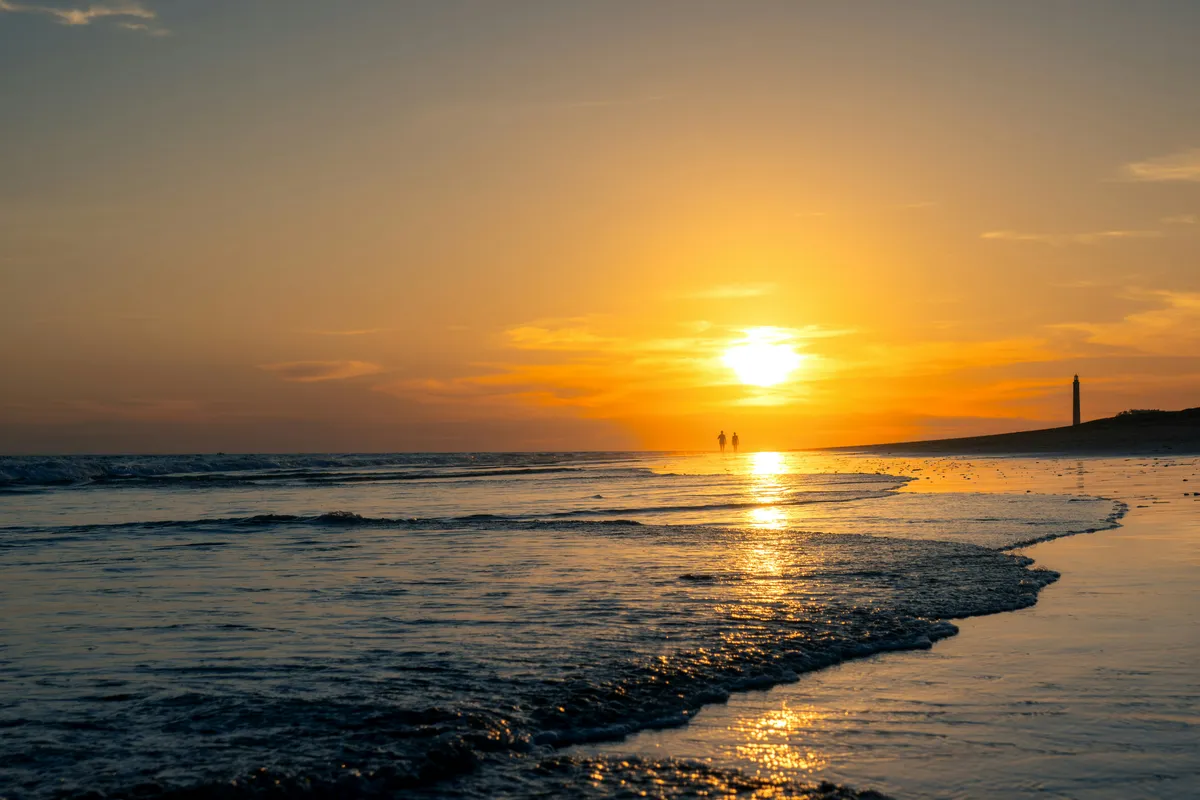
Gran Canaria has a beach for everyone: long stretches of golden sand beside the dunes, sheltered coves for families, a city beach with its own natural reef right in the capital, and a wild west coast of cliffs and pebble beaches. We’ve grouped them by area so you can find the one that suits your trip.
At a glance
| Beach | Area | Best for |
|---|---|---|
| Maspalomas | South | Walks beside the dunes |
| Playa del Inglés | South | Facilities and buzz |
| San Agustín | South | Peace and quiet |
| Amadores | South-west | Families and calm water |
| Puerto Rico | South-west | Sunshine and boat trips |
| Playa de Mogán | South-west | Beach time plus a harbour stroll |
| Las Canteras | Las Palmas | City beach and snorkelling |
| El Confital | Las Palmas | Volcanic scenery and surfing |
| La Aldea | West | Sunsets and wild coastline |
The south: golden sand and dunes
Maspalomas beach
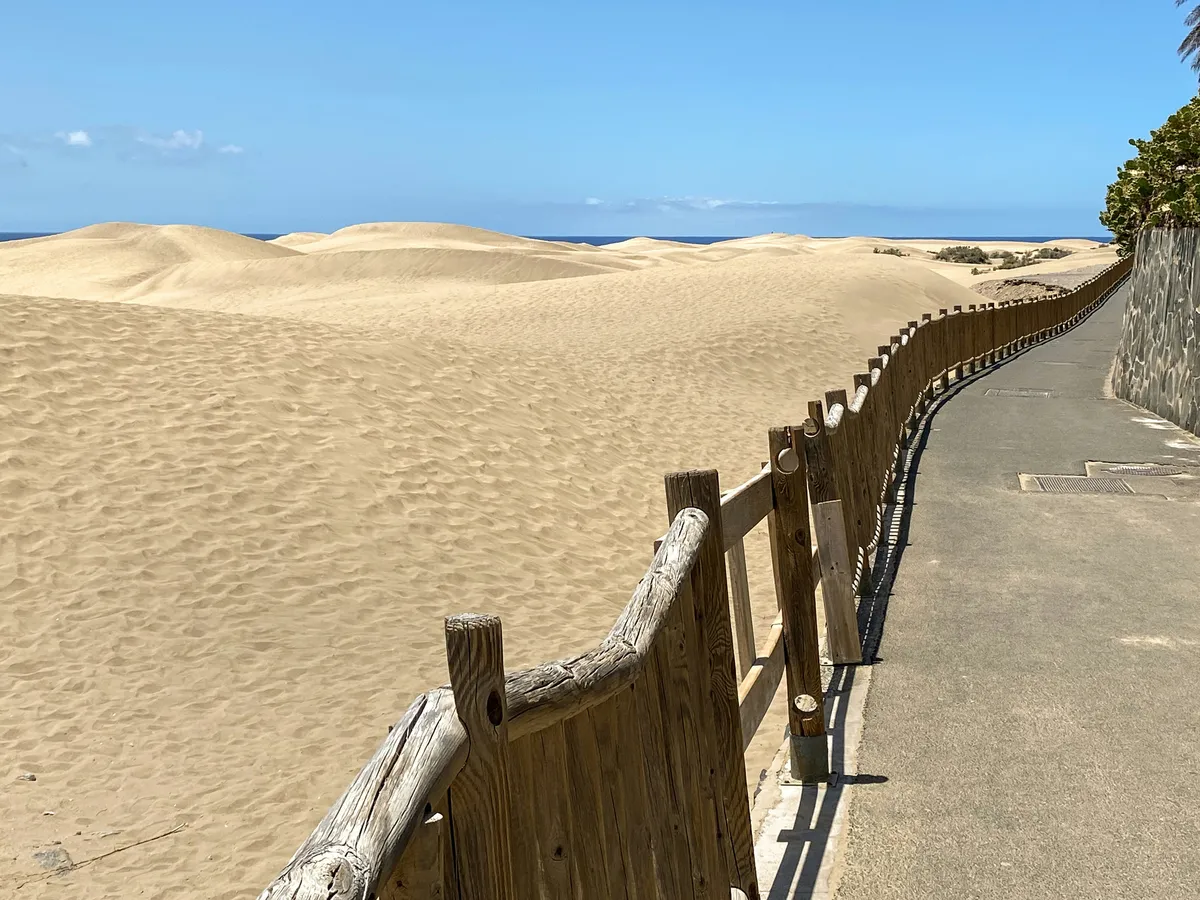
It runs alongside the Maspalomas dunes, a protected nature reserve, all the way to the Maspalomas lighthouse. It’s a long, open beach, perfect for walking along the shore with the dunes on one side and the Atlantic on the other. Always use the marked paths so you don’t damage the dunes.
Playa del Inglés
It carries on east from Maspalomas, and together they make up several kilometres of sand. It’s the south’s busiest beach, with the most facilities and a long promenade lined with bars and restaurants.
San Agustín
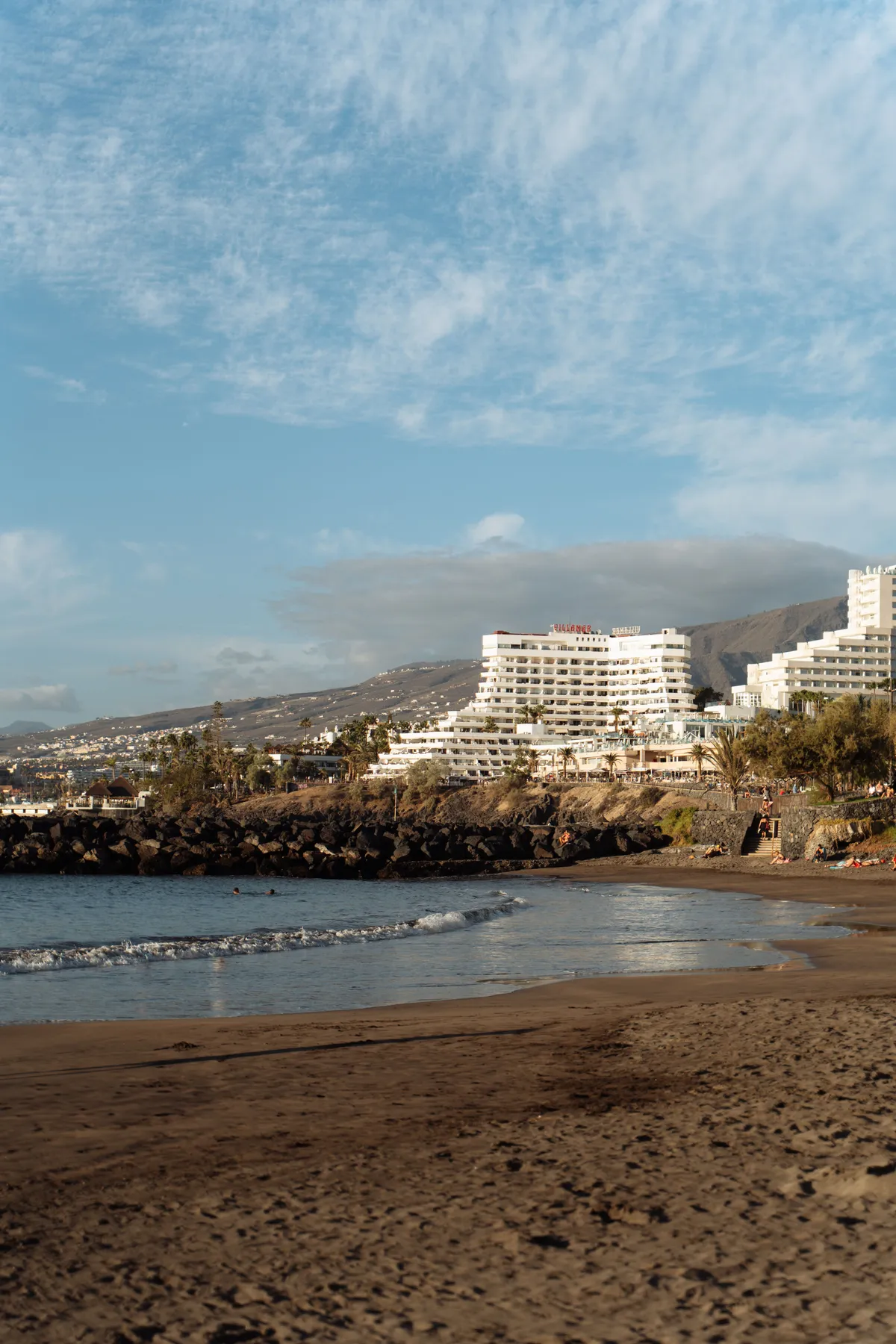
Smaller and quieter, just east of Playa del Inglés. A good choice if you want a relaxed atmosphere without straying far from the island’s biggest choice of places to stay.
On Google Maps: Maspalomas beach (opens in a new tab)Playa del Inglés (opens in a new tab)San Agustín beach (opens in a new tab)
The south-west: sheltered coves
The coast between Arguineguín and Mogán is dotted with small, sheltered beaches, where the sea is usually calm and the sun shines most of the year.
Amadores beach
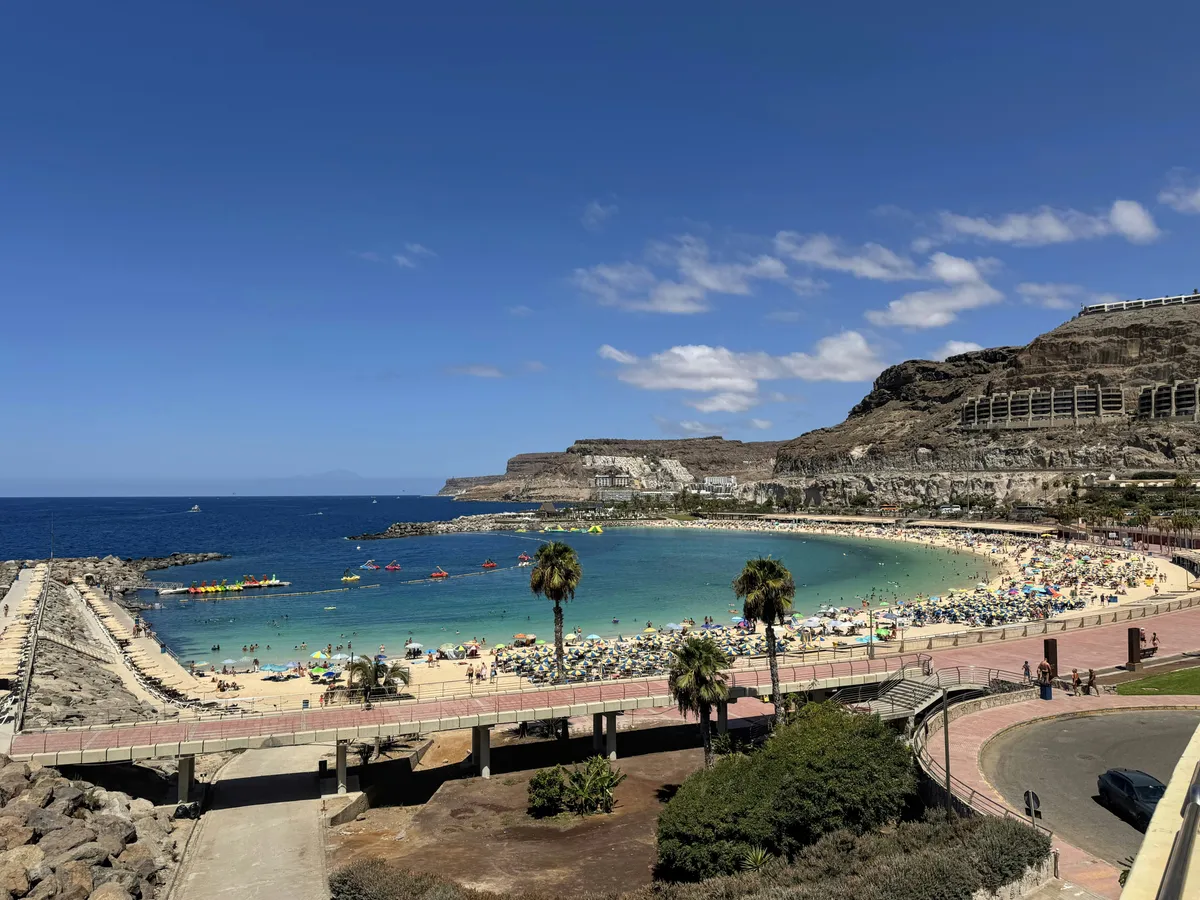
A man-made beach of pale sand and calm water, protected by breakwaters. It’s a favourite with families.
Puerto Rico beach
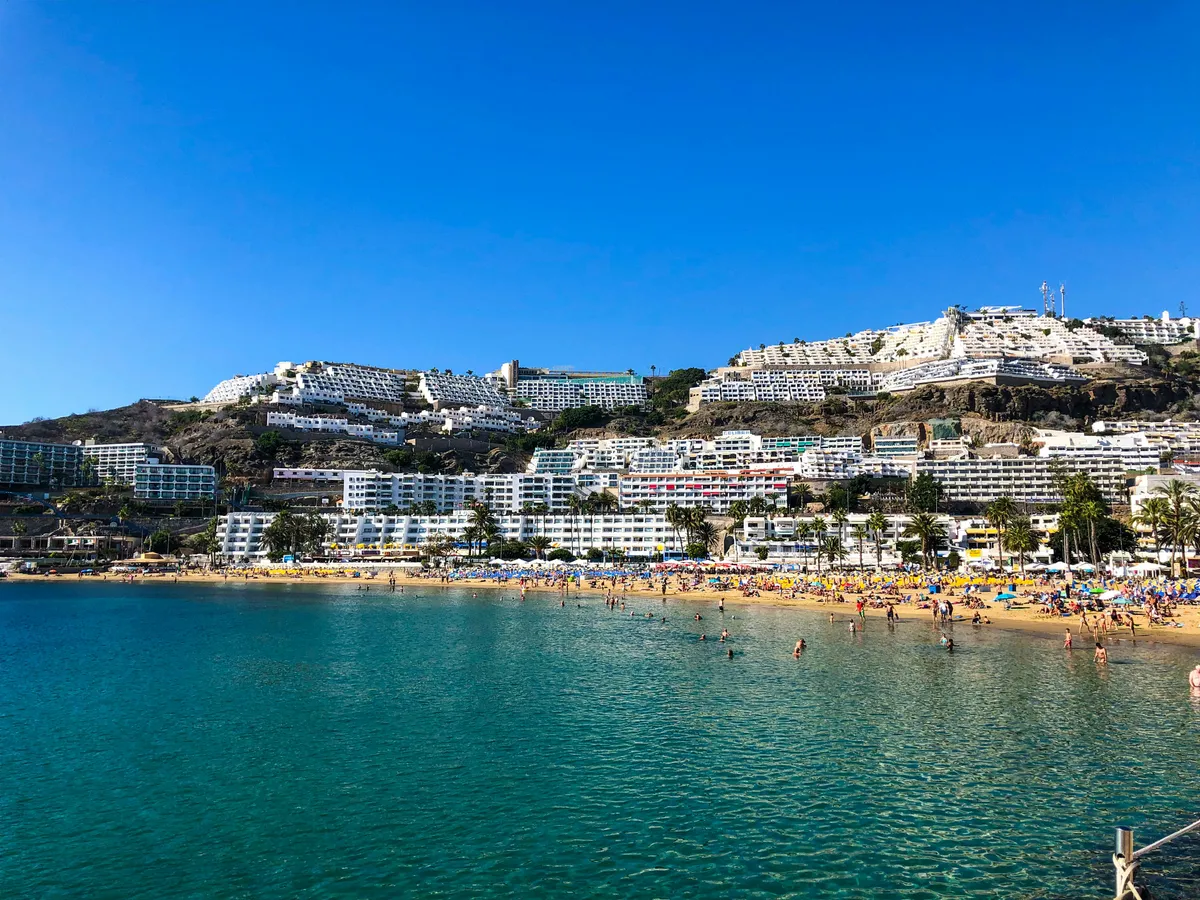
A wide bay of golden sand and calm water, ringed by apartments stepped up the hillsides. It’s one of the sunniest spots on the island and very easy-going for families. Right next to the beach is the marina, the starting point for many boat trips along the south coast.
Playa de Mogán
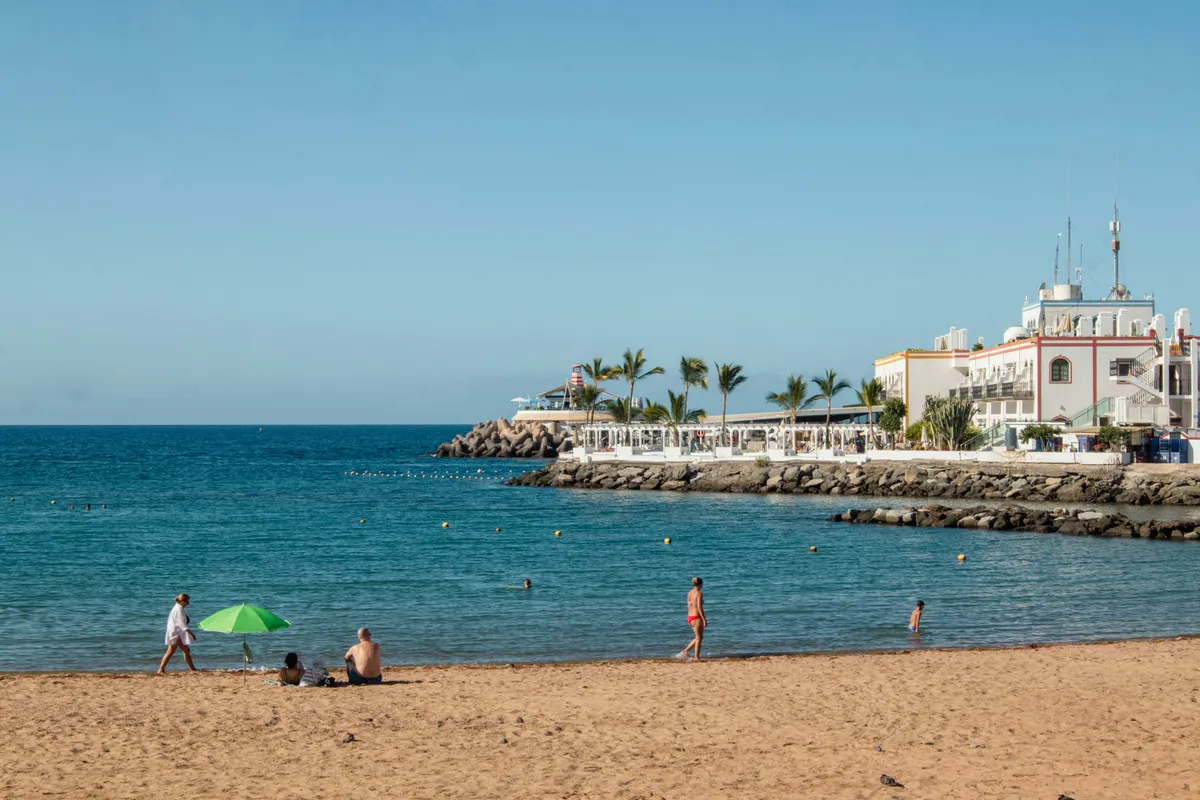
Right next to Puerto de Mogán’s harbour, this is a small, sheltered beach. Combine it with a wander along the village’s canals and quayside, and stay on for dinner.
On Google Maps: Amadores beach (opens in a new tab)Puerto Rico beach (opens in a new tab)Playa de Mogán (opens in a new tab)
Las Palmas and the north: beaches with character
Las Canteras
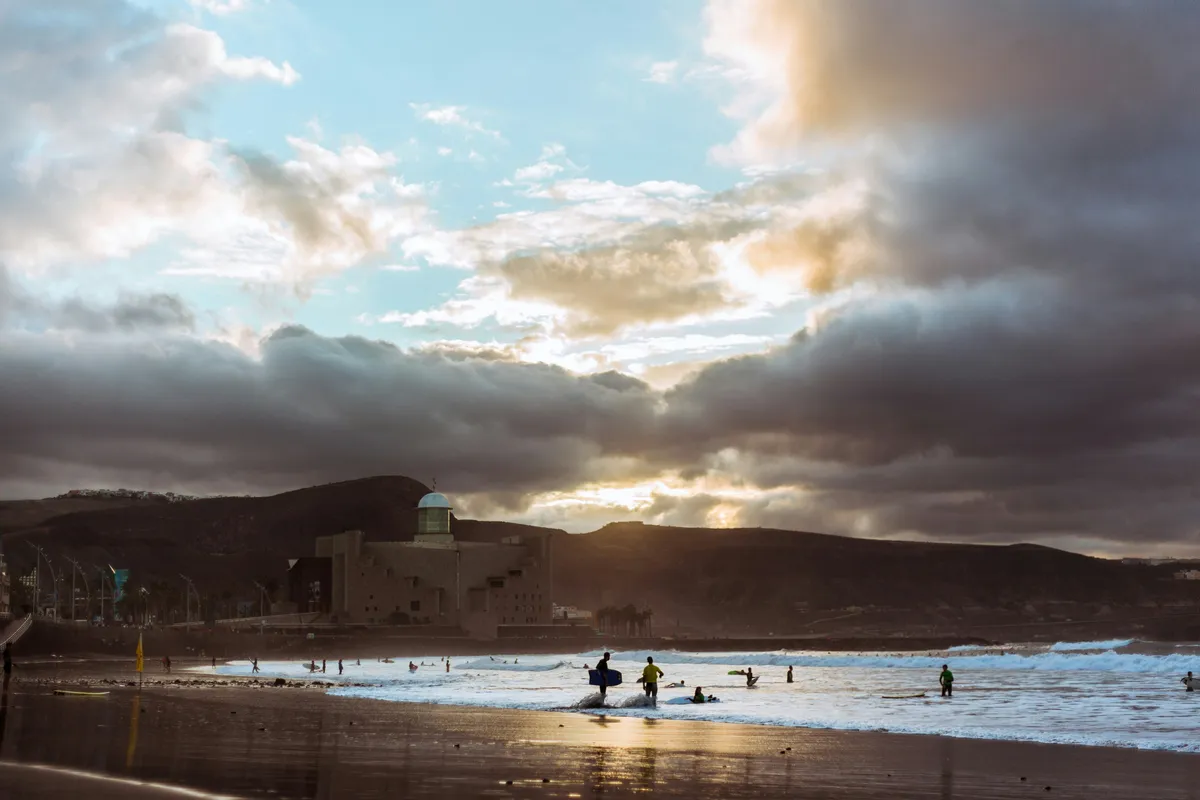
The capital’s great city beach, around three kilometres long. A natural rock reef, La Barra, shelters much of it from the waves, leaving calm water that’s ideal for swimming and snorkelling. Its promenade is perfect for a sunset stroll.
El Confital
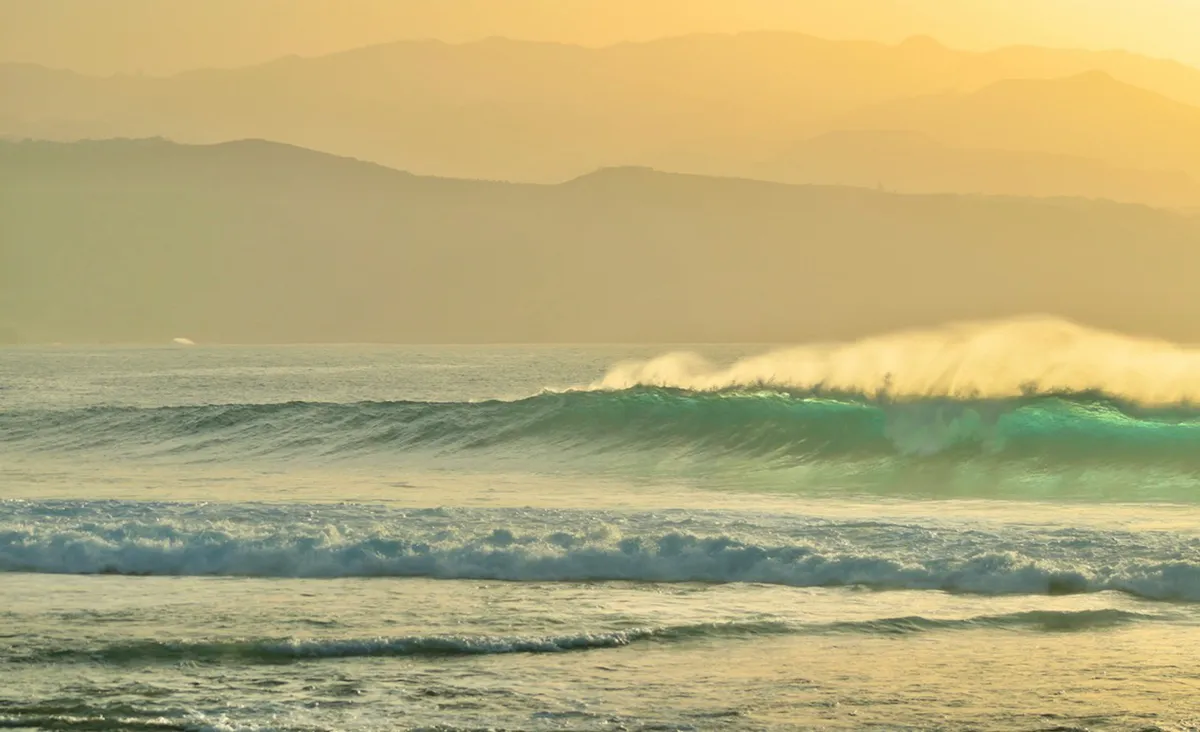
On La Isleta, very close to Las Canteras but a world apart: volcanic coastline, pebbles and waves. It’s well known among surfers and makes a great walk with views back over the city.
On Google Maps: Las Canteras beach (opens in a new tab)El Confital beach (opens in a new tab)
Good to know: the sea on the north coast is usually rougher than in the south. For calm water, try the Las Salinas rock pools in Agaete too — only when the sea is calm.
The west: a wild coastline
The west coast is Gran Canaria’s most rugged: cliffs, ravines running down to the sea and pebble beaches, with far fewer visitors than the south.
La Aldea beach
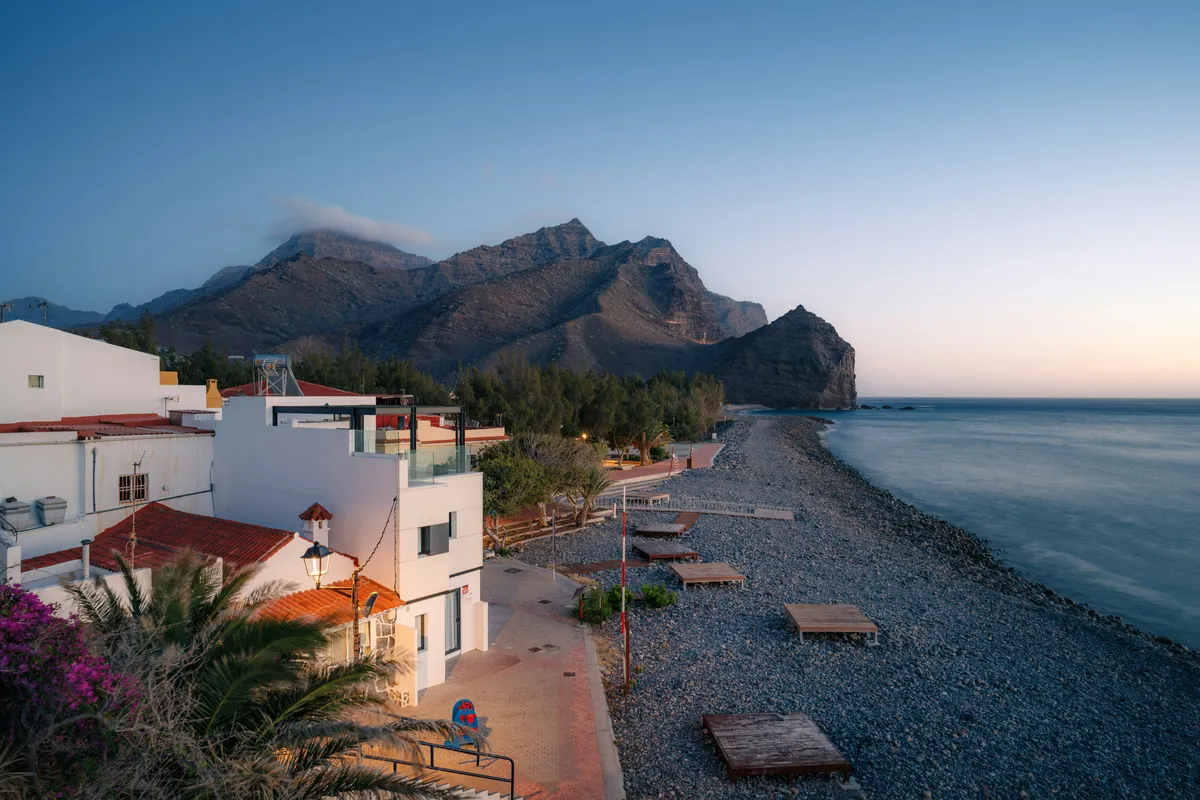
In the municipality of La Aldea de San Nicolás, at the end of the ravine that runs down to the sea, this is a pebble beach framed by mountains. It’s one of the best places on the island to watch the sun set over the Atlantic. Right beside it is El Charco, a lagoon that hosts the Fiesta del Charco every September, one of Gran Canaria’s most unusual traditions.
On Google Maps: La Aldea de San Nicolás beach (opens in a new tab)Charco de La Aldea (opens in a new tab)
Beach tips
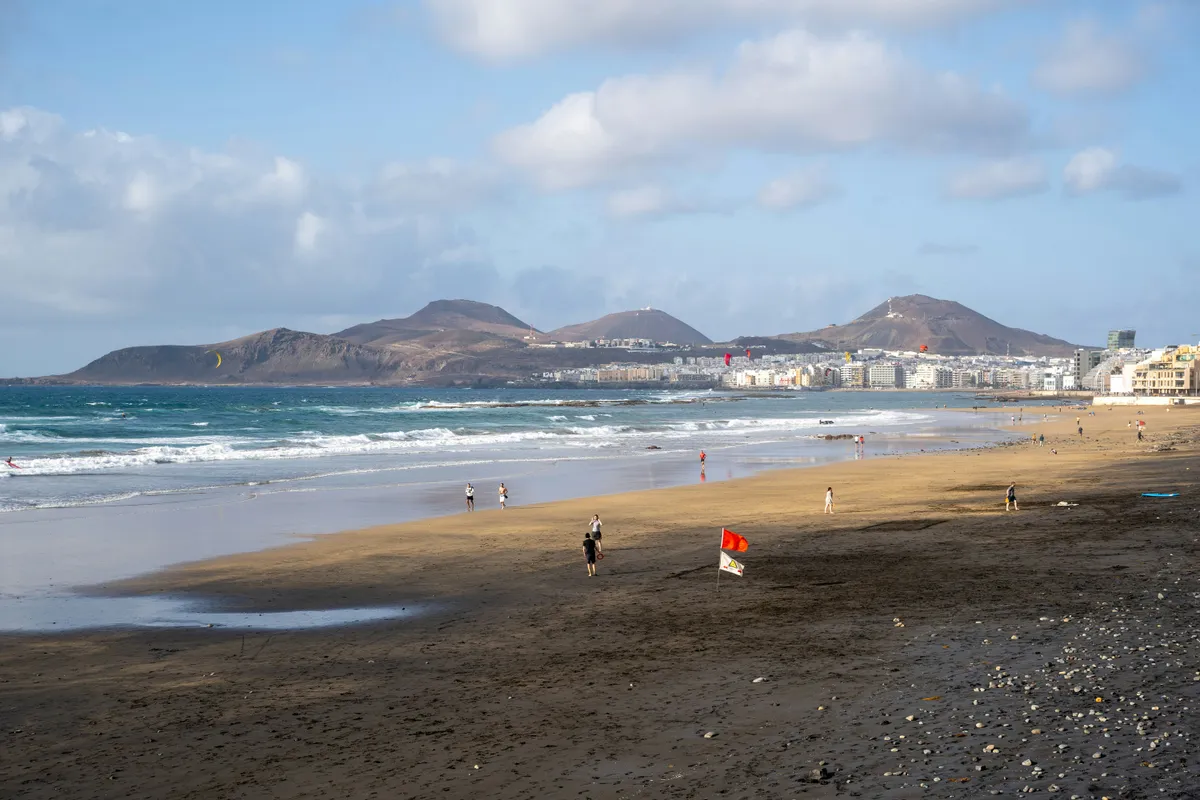
- Follow the flags: green means safe to swim; yellow, take care; red, no swimming.
- Protect yourself from the sun: even on cloudy days, the Canarian sun is strong all year round.
- Let the weather decide: if the north is cloudy or windy, the south is often clear — and vice versa.
- Respect the environment: don’t take sand or stones home, and stay on the paths in the dunes.
Where to stay near the beach
- Maspalomas & Playa del Inglés · South
- Meloneras · South
- Puerto de Mogán · South-west
- Las Palmas · North-east
- Arucas, Gáldar & Agaete · North
If the beach is your priority, the south (Maspalomas, Playa del Inglés or Meloneras) and the south-west (Puerto de Mogán and around) are the sunniest areas. If you’d like to mix beach and city, Las Palmas puts Las Canteras on your doorstep. We go into more detail in our guide North or south: where to stay in Gran Canaria.